What I Do When the Words Won’t Come
Every writer hits it – writer’s block. The session where the words just don’t come.
For me, bad writing days have a few different flavours.
The first is just tiredness. I write in the evenings and on Sunday afternoons. I don’t have the luxury of writing when I’m at peak energy. Sometimes I sit down and my brain simply isn’t there. The words come out flat, the sentences feel wrong, and I know before I’ve written a paragraph that this isn’t going to be a productive session.
The second is distraction. I have family. My wife and kids are in the house. I know they could probably use my time and attention. But I feel compelled to write, like I owe it to the story to show up. That tension creates a simmering of guilt that doesn’t exactly unlock creativity.
And then there’s the times when I get bogged down in the technical aspects of writing. That’s its own special misery.
Here’s a recent example. In the book I’m currently writing, Ray Holder takes a book from a crime scene. Simple enough. But I decided to change it — he doesn’t take the book, he photographs the pages instead. One small edit. Except that detail threads through the entire manuscript. Every scene that references that book now needs updating. So instead of writing forward, I spent a session combing backwards through the story, tracking down every mention and untangling the ripple effects.
That kind of work is necessary, but it’s the opposite of creative flow. It’s not what anyone imagines when they think about writing.
So what do I actually do when the words won’t come?
Two things.
The first: I get out of the house. I walk the city. Birmingham is claustrophobic and dense and full of people doing things. Those are exactly the qualities that make it hard to live in and useful to write about. Walking clears my head. Observing people puts me back in the right frame of mind. Most of what I need for my stories exists somewhere out there on those streets — I just have to go and look at it.
The second: I read.
Lee Child, who ran a masterclass I took, has a view on this that I think is right. He says almost anyone can become a writer. Except for one thing: you have to be a reader. His opinion is that if you don’t read, you simply can’t write. The connection is that direct.
When I’m stuck, reading reminds me of what good writing looks like. It recalibrates my instincts. It puts me in the presence of people who have solved the same problems I’m wrestling with.
Walking and reading. That’s it. No elaborate rituals, no productivity tricks. Just stepping away from the desk and remembering what drew me to stories in the first place.
Usually, that’s enough to bring the words back.
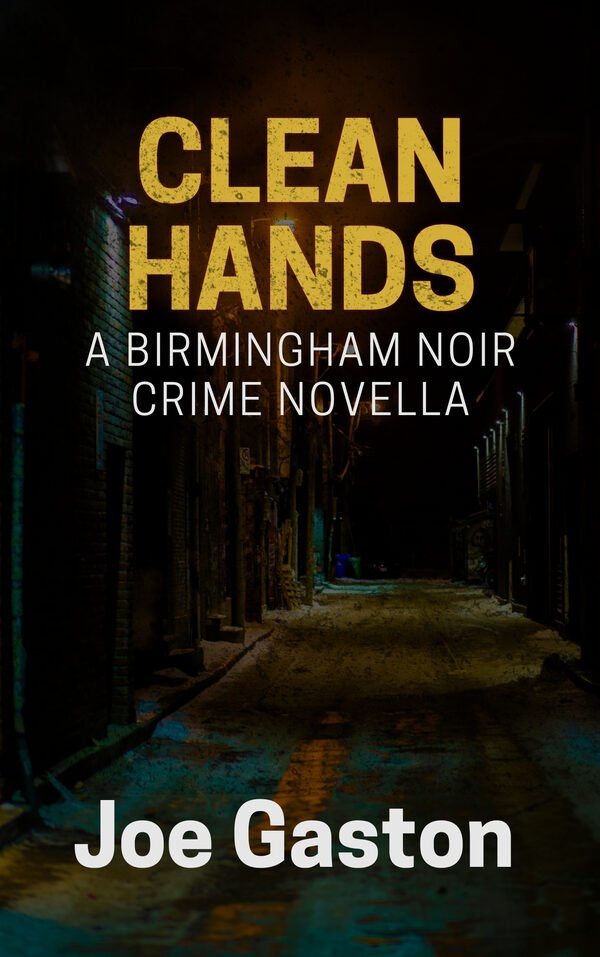
If you liked this, start with the free novella
Clean Hands is the free Ray Holder prequel — Birmingham, February 2009, one stab wound and a department that wants it filed by Friday. Short chapters, no padding, finishable in an evening.
Get Clean Hands free